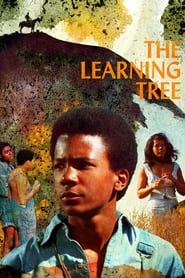
“The Learning Tree” is a coming-of-age story set in the 1920s small town Kansas, where young Newt learns about love, loss, and race relations. The film tackles themes of racism, identity formation and self-discovery. It is a poignant tale of a boy’s journey to find his place in the world amidst harsh realities.
CLICK HERE⭭⭭⭭📽️_Watch The Learning Tree 1969 English Subtitles_
Review
Saddle up folks, cause we’re about to take a ride through the heart of America’s history with Mark Twain himself. Today, we’ll be exploring the 1969 classic, “The Learning Tree”. This film is not only a captivating tale to watch, but it also holds cultural significance that Twain himself would have surely appreciated.
The story of “The Learning Tree” is set in the 1920s in rural Kansas, and follows the life of young Newt Winger (Kyle Johnson), as he navigates his coming-of-age journey amidst the struggles of racism and discrimination. Directed by none other than Gordon Parks, who also wrote the semi-autobiographical novel it was based on, this movie stands as a testament to his artistic prowess.
As we delve into the plot of this film, we witness how Newt must confront racial barriers and prejudice at every turn. He faces discrimination in school, harassment from white folks who look down on him for being black, and grapples with his own identity as he tries to navigate adolescence amidst such hostility.
The film’s cast is stunningly talented, and each actor brings their unique flair to their respective roles. From Kirk Calloway’s portrayal of Marcus Savage – one of Newt’s closest friends – to Dana Elcar’s role as Sheriff Kirky – who represents justice even in times of absolute chaos – every character manages to leave a mark on viewers.
Perhaps one of the most poignant scenes in this film is when Marcus Savage is lynched by white supremacists. This scene hits hard since it so realistically portrays how life was back then. It makes us realize that for many people back then just being black meant constantly dealing with fear and anxiety.
But despite these hardships that served as obstacles for African Americans back then; “The Learning Tree” ultimately shows how they were able to create fulfilling lives for themselves amidst all the hatred. The music score reflects the film’s theme well, with poignant melodies underscoring the movie’s most memorable moments.
“The Learning Tree” was a ground-breaking film during its time. It made history by being one of the first major studio films to be directed by a black person, and it addressed issues surrounding race and discrimination in a way that was novel for its time.
This movie has earned its place in cinematic history and is still just as relevant today as it was when it was first released. It paved the way for so many other films that deal with similar themes and continues to inspire new generations of filmmakers. That alone shows how much of a masterpiece this film is.
Looking back at “The Learning Tree”, it’s incredible to reflect on all the small details that made this movie so special. The attention to detail in every scene was truly remarkable, from the costume design to the set construction. Speaking of attention to detail, let’s not forget about how Parks’ exceptional cinematography managed to capture every emotion portrayed by each character.
Perhaps my favorite scene is when Newt returns home at night after Marcus Savage’s death, crying over his friend’s lynching while his father embraces him with open arms, only able to comfort him with words. It’s an emotionally charged scene that carries a lot of weight even today.
What made this film stand out aside from its cultural significance, are outstanding performances by all those involved in production: from actors, crew members or support technicians were all on top of their game during filming.
Some critics have criticized “The Learning Tree” for being too focused on African American issues; however, I believe otherwise since it reaffirms their struggle for equality in society–something Twain would undoubtedly agree with given his own stance towards slavery during his time period.
It remains one of Gordon Parks’ most acclaimed works and has since garnered several awards such as Best Directorial Debut at Cannes Film Festival and Image Award for Outstanding Motion Picture. The film’s soundtrack also managed to garner praise as a representation of the turmoil African Americans faced in the early twentieth century.
The movie’s dialogue is also exceptional, with an honest portrayal of how people used to speak back then. It’s often gritty and realistic, but it does an excellent job of keeping viewers engaged in the narrative.
In conclusion, “The Learning Tree” is a must-watch film for anyone interested in exploring America’s cultural heritage and struggles. It stands as a beautifully crafted story that captures both light and dark aspects of life, pushing us to reflect on how much progress we’ve made since then – or how far we have yet to go.
As Mark Twain once said, “The secret of getting ahead is getting started.” And so, I invite you all to watch this cinematic masterpiece with an open mind and heart today. Trust me; it will be well worth your time!
Technical Data
- Runtime : 107
- Release : 1969-08-06
- Genre : Drama
- Cast : Kyle Johnson as Newt, Alex Clarke as Marcus, Estelle Evans as Sarah, Dana Elcar as Kirky, Mira Waters as Arcella
- Crew : Burnett Guffey as Director of Photography, Gordon Parks as Screenplay, Gordon Parks as Director, Gordon Parks as Producer, Gordon Parks as Original Music Composer
- Popularity 1.754
- Budget : 0
- Revenue : 0
- Company : Winger
- Summary : The story, set in Kansas during the 1920’s, covers less than a year in the life of a black teenager, and documents the veritable deluge of events which force him into sudden manhood. The family relationships and enmities, the fears, frustrations and ambitions of the black teenager in small-town America are explored with a strong statement about human values.
- Tagline :
